What to Expect During Pool Construction
There is one question homeowners ask us more than any other, and it is rarely about price: how does pool construction work, and what is it actually like to live beside it for a few months?
Most builders stay vague about this part, which leaves you making a significant decision with less information than you would like to have. Knowing the sequence in advance is what turns a construction site in your backyard into a process you can follow with confidence.
So here is the full picture, phase by phase, in a backyard and on a real family’s schedule. That includes the loud days, the dusty weeks, and the stretch in the middle where it looks like nothing is happening at all.
Before Anything Happens: Design and Approval
A meaningful part of your timeline happens before anything starts, and homeowners are often surprised by that. The reason is worth understanding, because this phase is what prevents the two problems people fear most: a design that does not match what they pictured, and a structural issue that surfaces years later.
Your Design Consultation
The first conversation is less about pool shapes than about how your family actually lives outside. We want to know where the afternoon sun lands, what you see from the kitchen window, whether you host twelve people or four, and whether there are kids learning to swim, teenagers who want depth, or grandparents who need an easy way in.
We also walk the grade, the drainage, and the access, because those three things determine what your yard allows and what it costs. And we talk about the budget in this meeting, so you never get any surprise numbers.
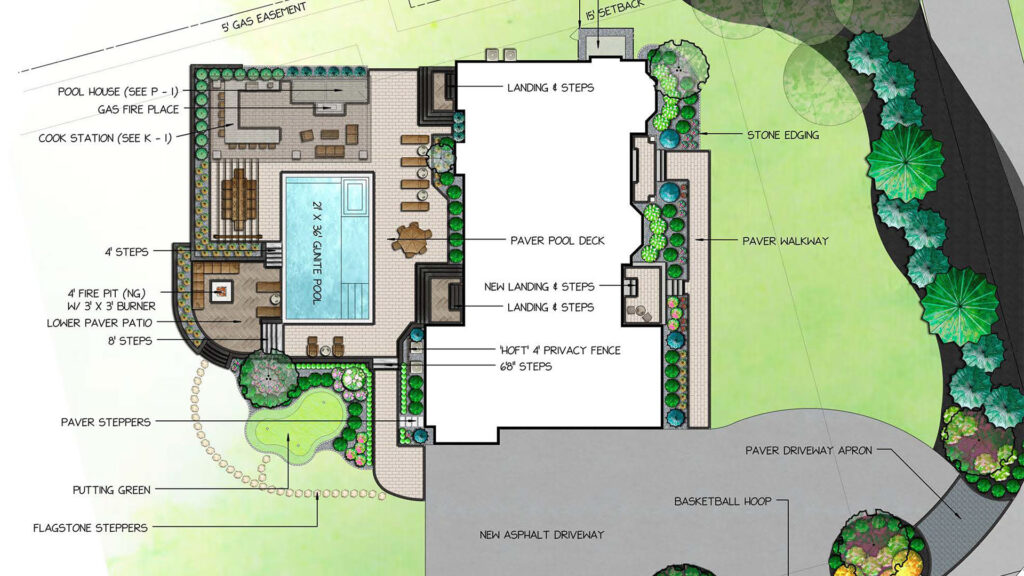
You will see your design as a 3D rendering of your pool and outdoor space before we build anything, which is how we make sure the pool in your head and the pool on the plan are the same pool.
Engineering and Permitting
Once the design is settled, an engineer produces a stamped plan built specifically for your property, your soil conditions, and your grade.
Then the plans go to your municipality for permit approval. Every St. Louis area city handles this differently, which is why it helps to work with a builder who has filed in your jurisdiction before and knows what the submittal package needs to contain.
It is the part of the process protecting you from every structural problem that would otherwise show up in year five.
How Does Pool Construction Work?
Here are the phases you will watch happen in your yard. If you want to see how we sequence the whole thing, our pool construction process page lays out each stage.

Layout and Excavation
We stake the outline of your pool on the ground first, and it is lovely to see this moment land, because it is usually when the whole thing starts to feel too good to not take a photo.
Then the equipment arrives, and excavation begins. This is the fastest visible progress you will see on the whole project, because the shape you approved on paper gets carved into the ground in a matter of days. There will be a large hole and a stockpile of soil we set aside to grade back at the end, and the site stays fenced from the first day of digging so the area is secure while the crew works. What looks like the biggest upheaval is actually the phase that moves quickest, and by the end of it your pool has a footprint you can stand beside.
Steel, Plumbing, and Electrical Rough-In
Next comes the skeleton and the nervous system. Our crew ties steel rebar throughout the shell and runs the plumbing and electrical lines.
This phase looks like slow progress, but it’s where the quality of your pool actually gets decided. We tighten rebar spacing as depth increases so you do not end up with hairline cracks in a decade, and we pressure-test the plumbing before the shell goes on so you never have to break concrete to find a leak.
The Shell Goes In
Our technicians spray gunite over the rebar framework at high pressure, and the walls and floor of your pool take shape in one continuous application. We form the steps, benches, tanning ledges, and spa walls the same day, which is what lets those features become part of the structure instead of something bolted on afterward.
Then comes curing. The shell needs time to reach full strength, and during that window there is no visible progress. Nothing has gone wrong, and no reputable builder will rush it, because a shell that cures properly is a shell you never think about again.
Tile, Coping, and Decking
Now your yard starts turning back into a backyard. Waterline tile goes in, we set the coping around the edge, and the decking goes down, where you can compare concrete, paver, and natural stone options along with the coping styles that finish the pool edge.
This is also where your pool connects to everything around it. If your project includes a patio, pergola, outdoor kitchen, or landscaping, this phase is where the whole space starts reading as one design rather than a pool with things placed near it.
Interior Finish, Equipment, and Start-Up
The interior finish goes on next: plaster, quartz aggregate, or PebbleTec. This is the surface you will touch every day and the biggest factor in how your water looks. Our guide to interior finishes and tile walks through the texture, color, and durability differences between them.
Elevate Pools is one of only two PebbleTec Elite Builders in the St. Louis metropolitan area, which means a crew certified by the manufacturer installs your finish rather than one learning on your pool.
We then set and plumb the equipment, connect the lighting, fill the pool, and balance and test the water chemistry.
Your Walkthrough and Handoff
Before we call it finished, we walk you through how your equipment runs, what routine maintenance looks like, what your warranty covers, and who to call. We do this in person, so you are never standing in your own backyard unsure how to operate it.
What Your Backyard Actually Looks Like Along the Way
There will be a dirt pile, and it will be bigger than you pictured. There will be equipment tracks across your grass. We put temporary fencing around the open excavation and leave it up while the site is active. Depending on access, a crew may need to come through a side yard, and sometimes that means taking down a section of fence and resetting it when we finish.
Your lawn takes the hardest hit in the access lanes, and the grass in those areas needs a full season to recover even after we restore it. Some homeowners schedule landscaping right after the build for that reason, and others wait a year to see how it comes back on its own.
How Does Pool Construction Work Around Your Family’s Daily Life?
This is the question we get most often, especially from families where someone works from home.
Noise, Hours, and Yard Access
Crews work standard daytime hours. The loudest phases are excavation and the shell application, and both are short. The quieter phases, steel work and finish work, make up most of the calendar.
Certain days require driveway or side yard access for equipment and deliveries. We tell you about those days in advance rather than letting you discover it when a truck pulls in, because a blocked driveway on a school morning is exactly the kind of small disruption that sours an otherwise good build.
Kids, Pets, and an Active Job Site
An open excavation is a real hazard and it deserves a real answer instead of a reassuring one. We fence the site while it is active, and fencing works best alongside one clear family rule: the backyard is off limits until we say otherwise.
The honest version is that your kids lose easy access to part of the yard for a stretch of weeks, not for the whole season. It helps to tell them early, show them the staked layout so they can picture what is coming, and give them a countdown. Pets should stay inside or leashed on active days.
Worth knowing for the long run: permanent pool safety fencing is a separate decision from the temporary construction fence, and it covers the removable mesh and code requirements that apply once the pool is open.
What We Need From You
Your list is short, because a build should not become your second job.
- Make your selections on time. Tile, coping, and finish choices are the most common cause of schedule slippage, and they are the one part of the timeline you control.
- Keep gate, driveway, and utility access clear on scheduled days. A crew that cannot reach the site still costs a day.
- Stay reachable for approvals. One decision-maker who answers a text within a day keeps everything moving. That is the whole ask.
The Parts Nobody Warns You About
Weather stops work, and a good builder lets it. No responsible crew sprays a shell or pours decking in the wrong conditions. A builder who pushes through bad weather to protect a promised date is protecting the date rather than your pool, and you will pay for that choice later.
Inspections run on the city’s calendar. They do not run on yours, and they do not run on ours either.
The curing lull feels like abandonment. It is not a delay. The shell is doing exactly what it needs to do, and rushing it is the one shortcut that would compromise the whole structure.
Selections take longer than people expect. The process is not slow. There are simply far more good options than most homeowners realize before they start looking.
Your grass needs a full season. Even after we restore the access lanes, those areas tell the story for a while before they blend back in.
How Communication Should Work During Your Build
You should have one named point of contact you can reach directly, a stated update cadence so you are never guessing, advance notice before crews arrive or the schedule shifts, and a phone call when something changes rather than silence until you notice it yourself.
Ask any builder three questions before you sign:
- Who is my day-to-day contact?
- How often will I hear from you?
- What happens when the schedule slips?
Vague answers to those questions are a preview of the whole project. We are protective of this part of our process because it is the difference between a build you enjoy watching and one you simply endure.
After the Water Goes In
Your first season is the learning season. We get you comfortable with your equipment, your water chemistry, and your routine, and we stay reachable when something comes up.
Because Elevate Pools is part of Elevate Outdoor, everything around the pool can stay with the same team. Hardscaping, outdoor kitchens, fire features, landscaping, and ongoing maintenance all come from one company you already know, so you never have to run a second round of contractor interviews to finish the backyard you just started.
Ready to See What Your Backyard Could Be?
The dirt pile, the fencing, and the waiting on permits all go away. What stays is the place your family ends up spending every summer evening, the first swim of the year, and the birthday parties you will still be talking about in twenty years. You can see finished versions of that in our project gallery, which includes freeform pools, raised spas, and full backyard builds around the St. Louis area.
When you are ready to talk specifics about your own yard, start your quote and we will set up your design visit.