Why Does My Pool Water Turn Green? Causes & Solutions Explained
Few things spoil the joy of stepping outside to your backyard oasis like looking into your pool and seeing…green. Instead of crystal-clear water glistening in the sun, there’s a murky, swampy tint that makes you second-guess taking a dip.
If you’ve found yourself staring at green pool water, you’re not alone. It’s one of the most common frustrations for pool owners, especially as temperatures rise and pool use picks up. The good news? It’s almost always fixable, and with a little understanding (and the right maintenance plan), you can keep your pool sparkling all season.
At Elevate Pools, we work with luxury pool owners across the St. Louis region who want their pools to be a source of relaxation, not a source of stress. Here’s why your pool water might be turning green, and exactly how to restore it to the clear, inviting state it should be.
The Top Causes of Pool Water Turning Green
The most common reason your pool water turns green is algae growth, but there are a few underlying issues that allow it to thrive. Understanding the “why” will help you not only fix it now, but also prevent it in the future.
1. Algae blooms
Algae are microscopic plants that love warm water, sunlight, and stagnant water. They can spread fast, sometimes overnight, if your sanitizer level drops or your filter isn’t doing its job. Even a small imbalance in chlorine can give algae the chance to take hold.
2. Low chlorine or sanitizer levels
Chlorine is your pool’s main defense against bacteria and algae—whether it’s added manually or generated through a saltwater system. In traditional chlorine pools, levels can drop after heavy use, rainstorms, or a missed treatment. In saltwater pools, the chlorine is produced via a salt cell, but if the cell isn’t working properly or the water temperature drops too low, it may not generate enough sanitizer to keep algae at bay. Regardless of the system, when sanitizer dips below safe levels, algae can spread fast.
3. pH and alkalinity imbalance
Even if chlorine is present, improper pH and alkalinity can make it ineffective. In both traditional and saltwater pools, high pH levels (above 7.8) can reduce the potency of chlorine, giving algae a window to grow. Saltwater systems are especially prone to rising pH levels over time, so regular testing and adjustment are critical. Keeping pH between 7.2 and 7.6 and alkalinity in the 80–120 ppm range ensures your sanitizer works the way it should.
4. Filtration or circulation problems
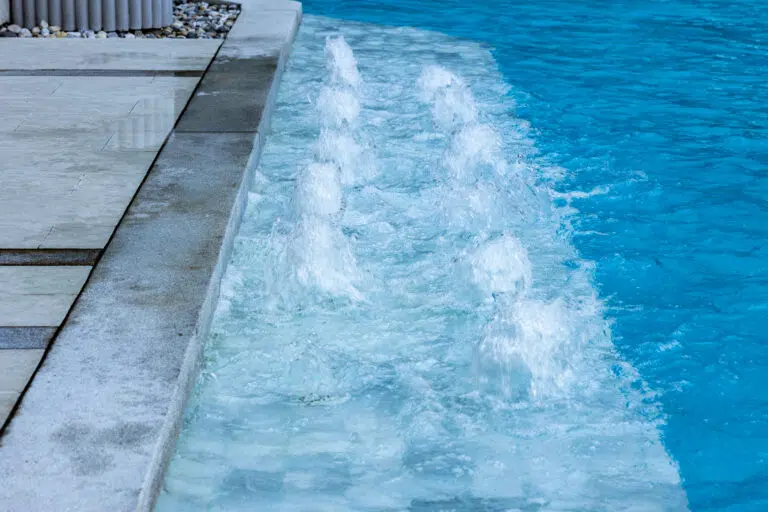
A dirty filter, clogged skimmer, or sluggish pump can stop your water from circulating properly. Stagnant water is the perfect breeding ground for algae. Water features like bubblers, deck jets, and sheer descents not only add visual appeal and ambiance—they also keep the water moving. These elements promote better circulation in low-flow or shallow areas that often get overlooked, helping to keep your entire pool healthier and cleaner.
5. Environmental factors
Nearby trees and plants, wind-blown debris, and high temperatures can all contribute. Organic matter like leaves and pollen not only clouds the water but also feeds algae growth.
Pool Maintenance 101 – Preventing Green Water
The easiest way to deal with green water is prevention. A consistent maintenance routine, whether you handle it yourself or partner with a professional, is key to a crystal-clear pool.
Test your water weekly (at minimum).
Check chlorine, pH, and alkalinity regularly. The ideal pH is 7.2–7.6, and alkalinity should sit between 80–120 ppm. If those numbers stay balanced, your chlorine can do its job.
Clean, skim, and brush your pool regularly.
Debris like leaves, pollen, and dirt not only makes your pool look dirty but also feeds algae. If you’re maintaining the pool yourself, skim the surface daily and brush the walls and floor weekly to keep algae spores at bay.
Not up for the upkeep? Consider hiring a professional pool maintenance service to handle the cleaning for you.
Maintain proper circulation and filtration.
Your pool pump should run 8–12 hours a day during peak season to keep water circulating and prevent algae growth. It’s also important to backwash or clean your filter regularly—usually when the pressure gauge rises 8–10 psi above its normal level.
Shock after heavy use or storms.
Anytime your pool sees extra swimmers or a big storm rolls through, it’s smart to give the water a boost. For traditional pools, that means using a chlorine-based shock treatment to kill off contaminants and rebalance your sanitizer. Saltwater pools still need to be shocked, too—especially after heavy use or extreme weather. While the salt cell generates chlorine continuously, it might not be enough to handle a sudden spike in organic matter or bacteria. A non-chlorine shock or temporary chlorine boost can help restore water clarity and sanitation quickly.
How to Fix Green Pool Water Fast
If you’re already staring at green water, here’s how to bring it back to life:
Step 1: Test your water and balance chemicals.
Check pH, alkalinity, and chlorine levels. Bring pH down to 7.2–7.4 so chlorine will work effectively.
Step 2: Shock the pool.
Use a chlorine shock treatment (around 1 lb per 10,000 gallons for light algae, up to 3 lbs for heavy blooms). Add it at night for best results, as sunlight can burn off chlorine quickly.
Step 3: Run your pump continuously
Run the filter 24/7 until the water clears. Backwash or clean the filter as often as needed—it will be working overtime pulling algae out.
Step 4: Brush and vacuum
Algae clings to walls and the pool floor. Brush every surface, including steps, ladders, and behind lights.
Step 5: Retest and repeat if needed
Sometimes it takes more than one shock cycle to fully clear the water. If you’re still seeing a green tint after 24–48 hours, repeat the process.
Keep Your Pool Crystal Clear
Green pool water is frustrating, but it’s not permanent. With a little knowledge, regular care, and some professional support, you can keep your water as inviting as the day your pool was built.
Whether you’re dreaming of adding bubblers, deck jets, a tanning ledge, or even refreshing your tile and plaster, Elevate Pools can help bring your pool back to life in a way that fits your lifestyle and adds value to your home. Our team specializes in luxury pool renovations, feature enhancements, and repairs that turn an outdated or underperforming pool into the centerpiece of your backyard oasis. Let’s talk about what’s next for your pool.