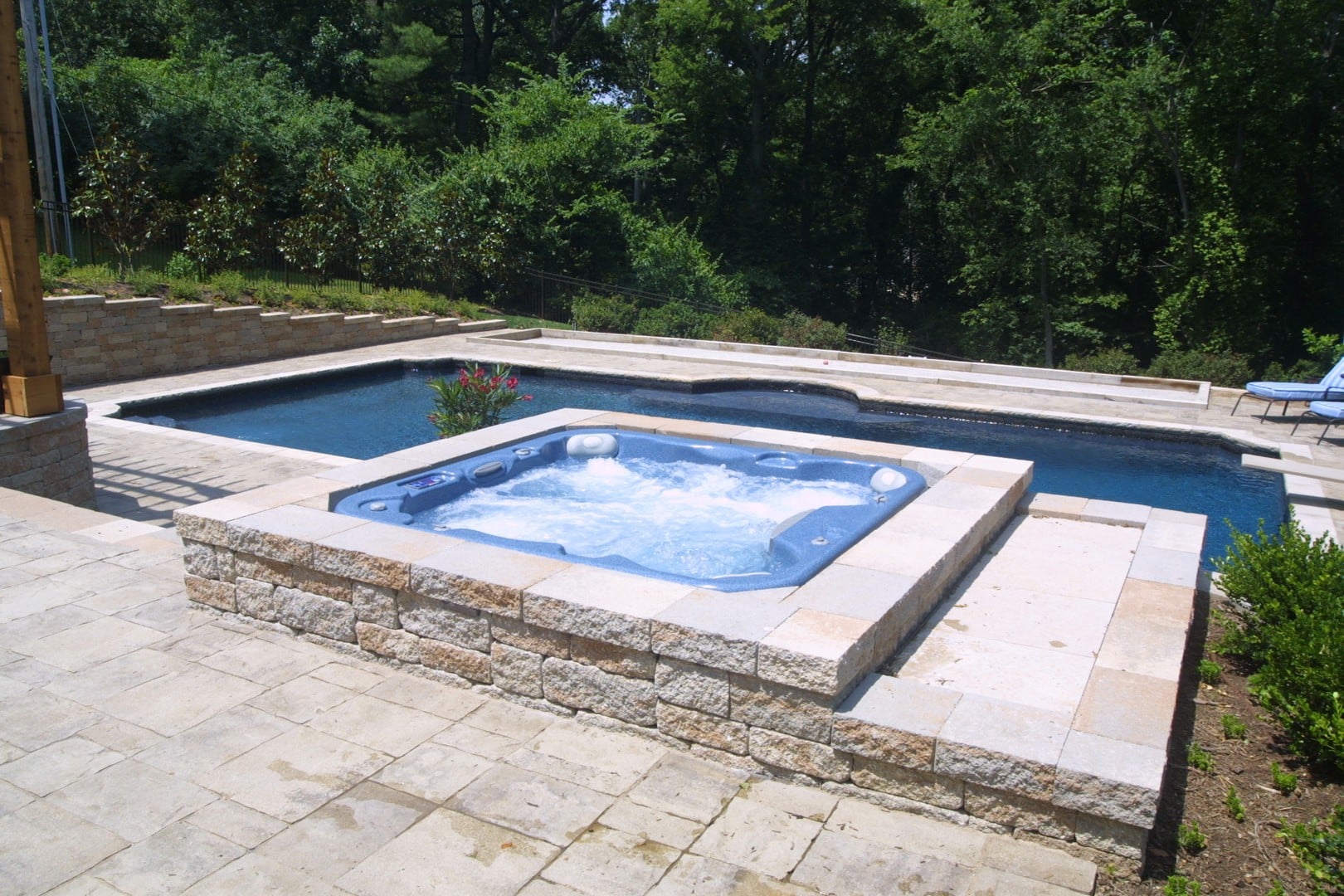
Swim Spa vs. Hot Tub: How to Choose the Right Fit for Your Home
Both swim spas and hot tubs have real appeal. They’re marketed brilliantly, they show up beautifully on social media, and on paper, they seem like smart, versatile investments. But there’s a lot that the showroom floor and the Costco display model won’t tell you — and those are the things that matter most when you’re making a decision you’ll live with for the next decade or two.
This article delivers a breakdown of both options — what’s great, what’s not, and what the total cost of ownership actually looks like.
What Is a Swim Spa?
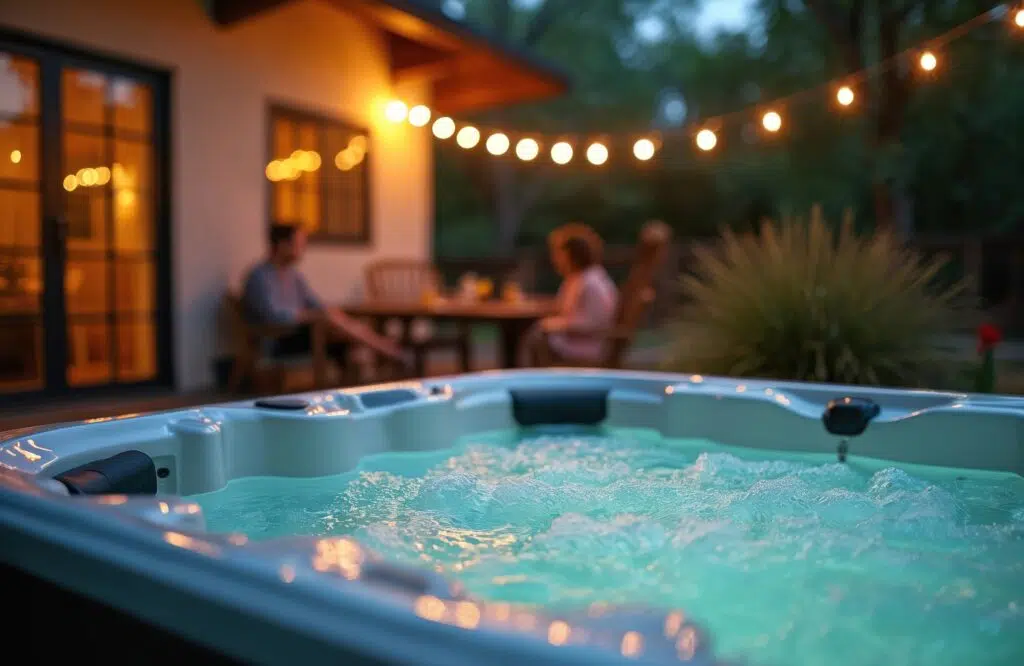
A swim spa is essentially a hybrid product, part swimming pool, part hot tub, built into a self-contained unit that’s typically 12 to 19 feet long and about 7 to 8 feet wide. The core feature is a set of powerful resistance jets at one end that push a steady current of water toward you, allowing you to swim in place, like a treadmill for the water. The other end often features the kind of therapy jets and seating you’d expect from a traditional hot tub.
The appeal is obvious. It takes up a fraction of the footprint of a real pool. It can be used year-round in climates like Missouri’s because the water stays heated. And it promises to serve double duty — fitness and relaxation in one unit.
Swim Spa Benefits
- Year-round usability. In the Midwest, where winters in the St. Louis and Kansas City metro areas can be brutal, a heated swim spa means you’re not shutting things down after Labor Day. That’s a real advantage over a pool that sits dormant for four to five months a year.
- Exercise capability. For someone training for a triathlon, recovering from an injury, or just wanting low-impact resistance swimming without driving to a gym, the current jets in a quality swim spa can be genuinely effective. It’s not the same as open-water swimming, but it’s a legitimate workout tool.
- Compact footprint. If you have a smaller backyard, a condominium deck, or a side yard with limited square footage, a swim spa can fit in spaces where a full inground pool simply cannot.
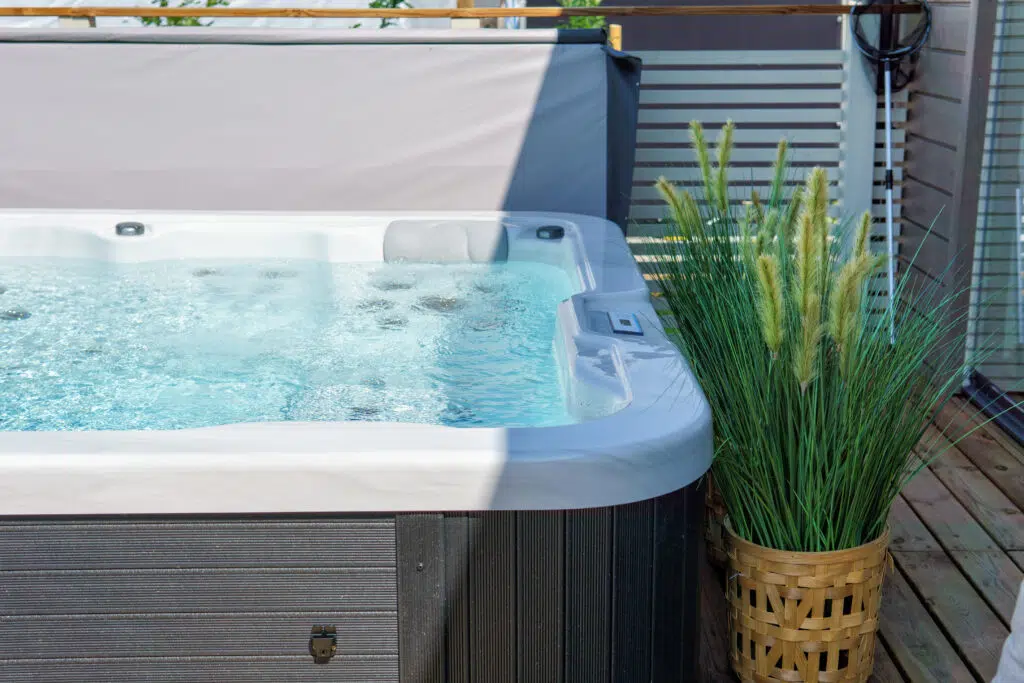
- Hydrotherapy access. The hot tub end of a quality swim spa features therapy jets for sore muscles, stress relief, and general relaxation.
- Lower upfront cost than a full custom pool. A swim spa costs significantly less than a custom inground pool, making it more accessible for households where a $60,000–$100,000+ pool project isn’t in the budget.
The Real Swim Spa Cost
This is where a lot of buyers get a surprise. The swim spa price you see advertised is almost never the all-in number. Here’s a more complete picture of what you’re actually spending.
Purchase Price
A quality swim spa from a reputable manufacturer, brands like Master Spas, Endless Pools, or Hydropool, will typically run you anywhere from $15,000 to $30,000 for a mid-range unit, with premium models pushing $35,000 to $45,000 and higher. The “swim spas” you see at Costco or Sam’s Club might show up in the $8,000 to $12,000 range, but more on that in a moment.
Installation Costs
This catches a lot of buyers off guard. A swim spa typically requires a reinforced concrete pad (not just a deck), electrical wiring for a dedicated 240V circuit, and in many cases a crane or specialized equipment to set the unit in place — particularly if your yard has any access constraints. Budget anywhere from $2,000 to $8,000+ just for installation, depending on your site conditions.
Operating Costs
Because a swim spa maintains a heated water temperature year-round (or at least through colder months), it runs constantly. According to most manufacturer data and owner reports, you can expect to add $75 to $150 per month to your energy bill, sometimes more in winter. Over a 10-year lifespan, that’s $9,000 to $18,000 in energy costs alone.
Maintenance
Chemical balancing, filter replacements, jet maintenance, and cover replacement (swim spa covers are large and wear out faster than you’d expect) add up. Expect $500 to $1,200 per year in routine maintenance costs, plus any repairs.
Lifespan
A well-maintained swim spa from a quality manufacturer might last 10 to 15 years. Compare that to a custom gunite inground pool, which is designed to last 20 to 30+ years. When you run the total cost of ownership math, the “more affordable” option sometimes looks a lot less affordable.
Should You Buy a Swim Spa at Costco? The swim spas sold at Costco are typically entry-level or mid-grade units offered at a competitive price point. There’s nothing inherently wrong with that — but here’s what you need to know before you click “Add to Cart”:
- Warranty coverage is often limited, and the manufacturer may be difficult to reach for service claims.
- Installation and delivery logistics are your responsibility — Costco doesn’t coordinate that for you.
- Long-term parts availability and service support can be a challenge with brands that aren’t widely distributed through dealer networks.
- The jets in lower-price swim spas are often underpowered, which means the “swimming” experience is less effective than advertised.
If you’re looking to dip your toes in (pun intended) at a lower price point, buying from a big-box store is an option. Just go in with eyes open about what you’re trading off.
What Is a Hot Tub?
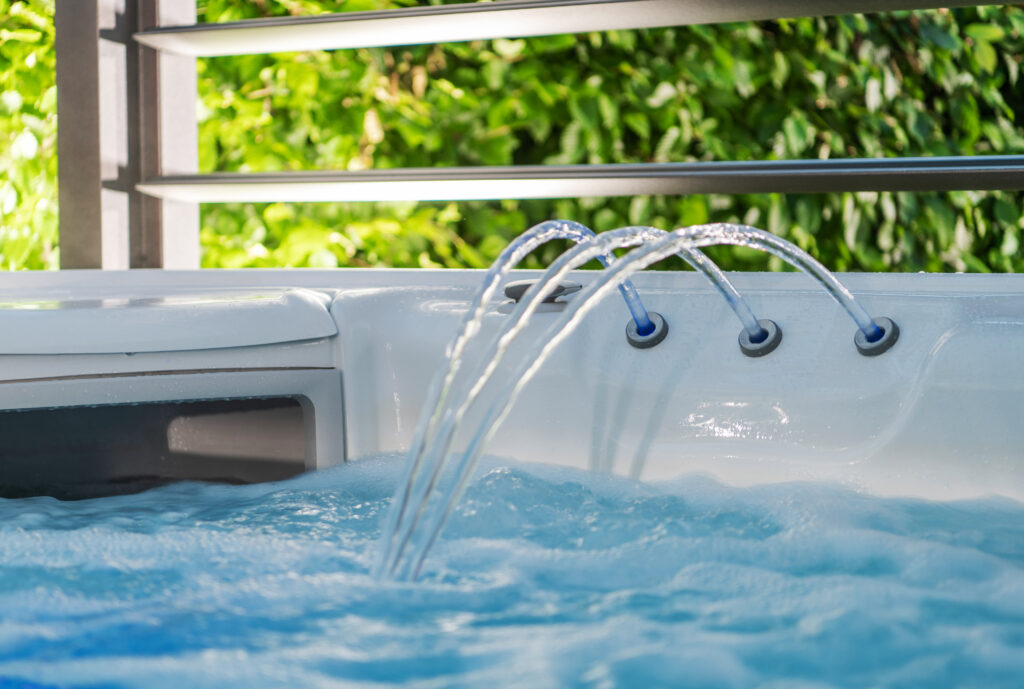
A hot tub is a self-contained, freestanding unit designed primarily for soaking, relaxation, and hydrotherapy. Most residential hot tubs seat four to eight people and measure roughly six to eight feet across. They’re equipped with therapy jets, built-in seating at varying depths, a filtration system, and a cover. Unlike swim spas, hot tubs don’t offer any swimming or exercise capability — but they deliver a focused, high-quality soaking experience in a compact, relatively simple package. They can be placed on a patio, deck, or concrete pad, and they’re available through specialty dealers, big-box retailers, and warehouse clubs like Costco.
Hot Tub Benefits
- Relaxation and hydrotherapy. Hot tubs are purpose-built for what most people actually want — soaking sore muscles, unwinding after a long week, and spending low-key time with family and friends. The therapy jet configurations in quality hot tubs are specifically designed for targeted relief, which swim spas don’t always match.
- Year-round usability. Like swim spas, hot tubs maintain a heated water temperature through colder months, making them a genuinely four-season investment in the Midwest.
- Lower upfront cost. A quality hot tub costs significantly less than a swim spa, making it the more accessible entry point for households that want the spa experience without the swim spa price tag.
- Simpler installation. Hot tubs generally require less site prep than swim spas. Many can be placed directly on an existing patio or a standard reinforced pad without crane equipment or extensive electrical work.
- Compact footprint. Hot tubs fit in tight spaces — a corner of a patio, a deck addition, or a small backyard — without the length requirement that swim spas demand.
- Wide range of options. From entry-level portable units to premium models with advanced jet systems, LED lighting, and sound systems, the hot tub market has a product at virtually every price point and feature level.
The Real Hot Tub Cost
Like swim spas, the sticker price on a hot tub rarely tells the whole story. Here’s what the full investment actually looks like.
Purchase Price
A quality hot tub from a reputable manufacturer, brands like Caldera Spas, Jacuzzi, or Hot Spring, will typically run $5,000 to $12,000 for a mid-range unit, with premium models pushing $14,000 to $16,000 and higher. Entry-level models from big-box retailers like Costco can be found in the $3,000 to $6,000 range, though what you trade off at that price point is worth understanding before you buy.
Installation Costs
Most full-size hot tubs require a dedicated 240V, 50-amp circuit with a GFCI disconnect panel. If you don’t already have that infrastructure, you’re calling an electrician — budget $500 to $1,500 depending on how far your electrical panel is from where the tub will sit. If you need a new concrete pad, add another $500 to $2,000. If your backyard access is limited, crane or specialty moving services can add $400 to $800 more.
Operating Costs
A well-insulated hot tub from a quality manufacturer is reasonably efficient to run, but it’s still a heated body of water operating year-round. Expect to add $50 to $100 per month to your energy bill, with higher costs in winter months. Over a 10-year lifespan, that’s $6,000 to $12,000 in energy costs.
Maintenance
Chemical balancing, filter replacements, and cover maintenance typically run $300 to $700 per year for a hot tub, somewhat less than a swim spa given the smaller water volume.
Lifespan
A well-maintained hot tub from a quality manufacturer lasts roughly 10 to 15 years, though entry-level units can show wear much sooner
Head-to-Head Comparison
| Swim Spa | Hot Tub | |
| Upfront Cost | $15K–$35K+ | $3K–$16K+ |
| Lifespan | 10–15 years | 5–15 years |
| Home Value Impact | Minimal | None |
| Hydrotherapy / Spa | Yes (temp compromise) | Yes |
| Year-Round Use | Yes | Yes |
| Aesthetic / Design | Utilitarian | Functional |
| Customization | Limited (prefab) | Limited |
So, Which One Is Right for You?
The right choice comes down to a few key factors — your yard, your budget, and how you actually plan to use it. Here’s a straightforward way to think about it
A swim spa probably makes sense if:
- Your yard is too small for an inground pool
- Your main goal is fitness and low-impact exercise
- Your budget is under $30,000
A hot tub probably makes sense if:
- Relaxation and soaking are your primary goals
- You want a low-cost, low-commitment option
- You’re looking for something simple and easy to maintain

Every Backyard Is Different. Let’s Figure Out Yours
At the end of the day, both swim spas and hot tubs have their place, and the right choice really comes down to how you plan to use it, what your backyard can accommodate, and what kind of investment makes sense for your situation. There’s no universal right answer, but there is a right answer for you.
At Elevate Pools, we’ve helped homeowners think through exactly these kinds of decisions — and we’re happy to do the same for you, no pressure, no sales pitch. Just an honest conversation about what you’re looking for and what would actually work best for your backyard.
Not sure where to start? Reach out and let’s figure it out together.